
Is your 2-year-old still not talking much? Does your child understand what you say but struggle to express their needs through words? Do you find yourself comparing your child’s speech with other children of the same age?
If you are concerned about your toddler’s speech development, you are not alone. Many parents notice differences in how children learn to speak, understand language and communicate during the early years.
While every child develops at their own pace, certain speech and language milestones can help parents understand whether their child may need additional support.
In this article, we will explain the common signs of speech delay in 2-year-olds, possible contributing factors, when to seek professional help and how parents can encourage
What Is Speech Delay in a 2-Year-Old?
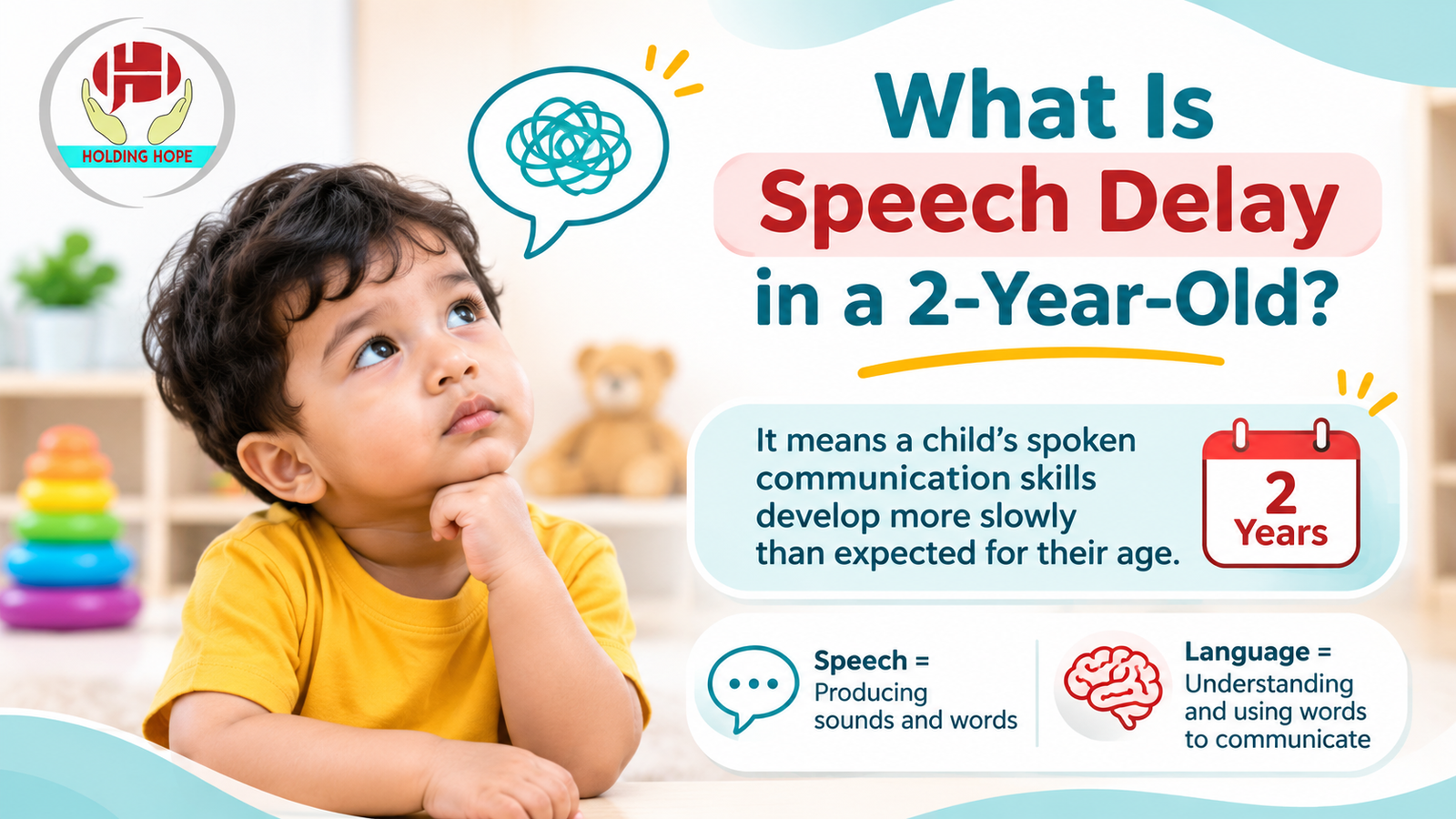
Speech delay refers to a child developing spoken communication skills more slowly than expected for their age. Some children may have difficulty saying words clearly, while others may use very few words or struggle to combine words into simple phrases.
It is important to understand the difference between speech and language:
Speech refers to producing sounds and words so that others can understand what a child is saying.
Language refers to understanding and using words, gestures and sentences to communicate thoughts, needs and feelings.
A child may experience difficulties with speech, language or both. A professional assessment can help identify the specific areas where support may be needed..
Speech and Language Milestones for a 2-Year-Old
By the age of 2, children are generally becoming more confident communicators. They may use words to name familiar objects, ask for things, express their needs and interact with family members.
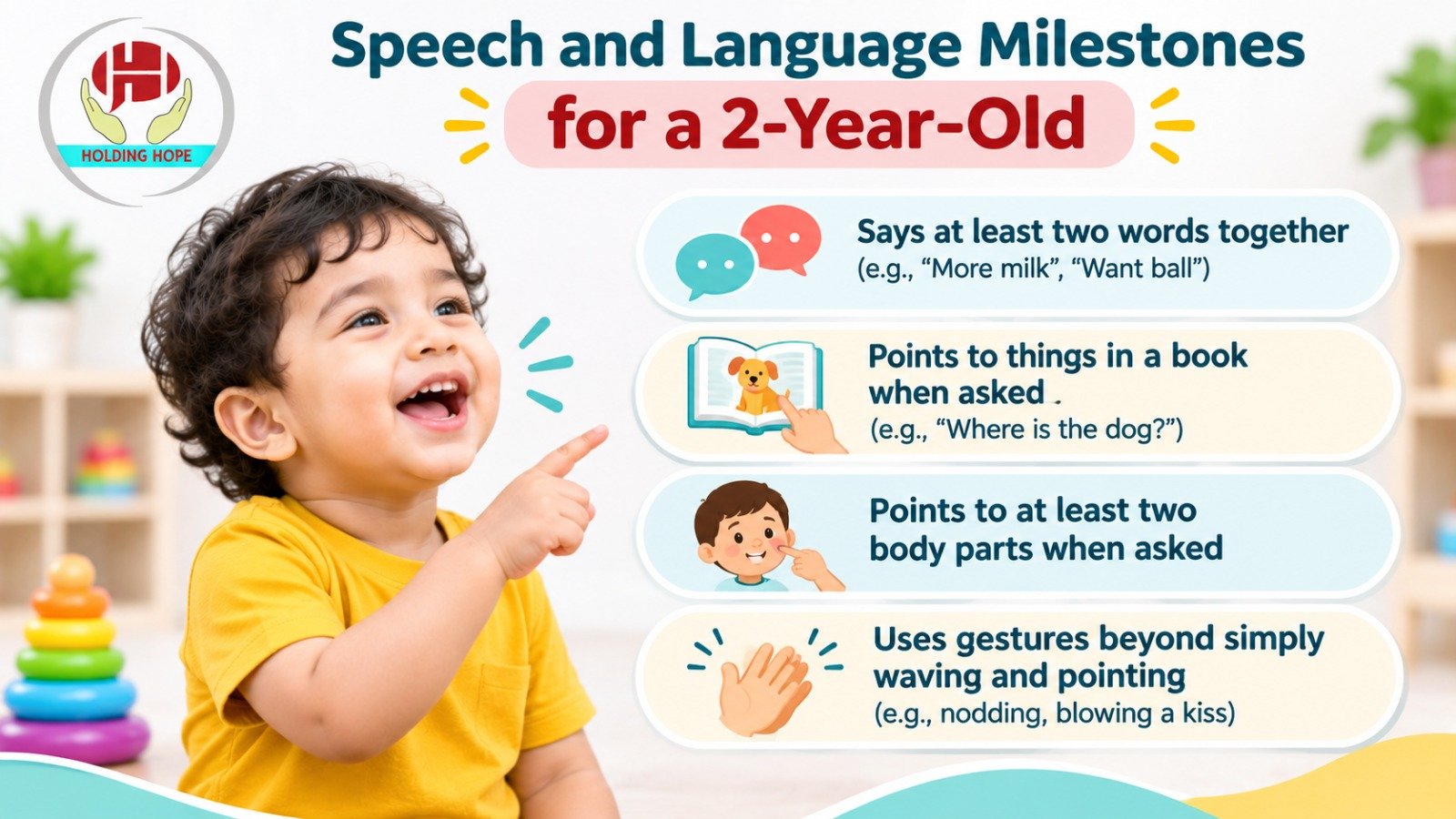
According to the CDC, most children can do certain communication-related activities by the end of age 2.
Some important milestones include:
Saying at least two words together, such as “More milk” or “Want ball.”
Pointing to things in a book when asked, such as “Where is the dog?”
Pointing to at least two body parts when asked.
Using gestures beyond simply waving and pointing, such as nodding or blowing a kiss.
These milestones are useful guidelines, not a diagnostic test. Children may develop individual skills at different rates.
If your child is not reaching these milestones, it is worth discussing your concerns with a healthcare professional or speech-language pathologist.
7 Common Signs of Speech Delay in 2-Year-Olds
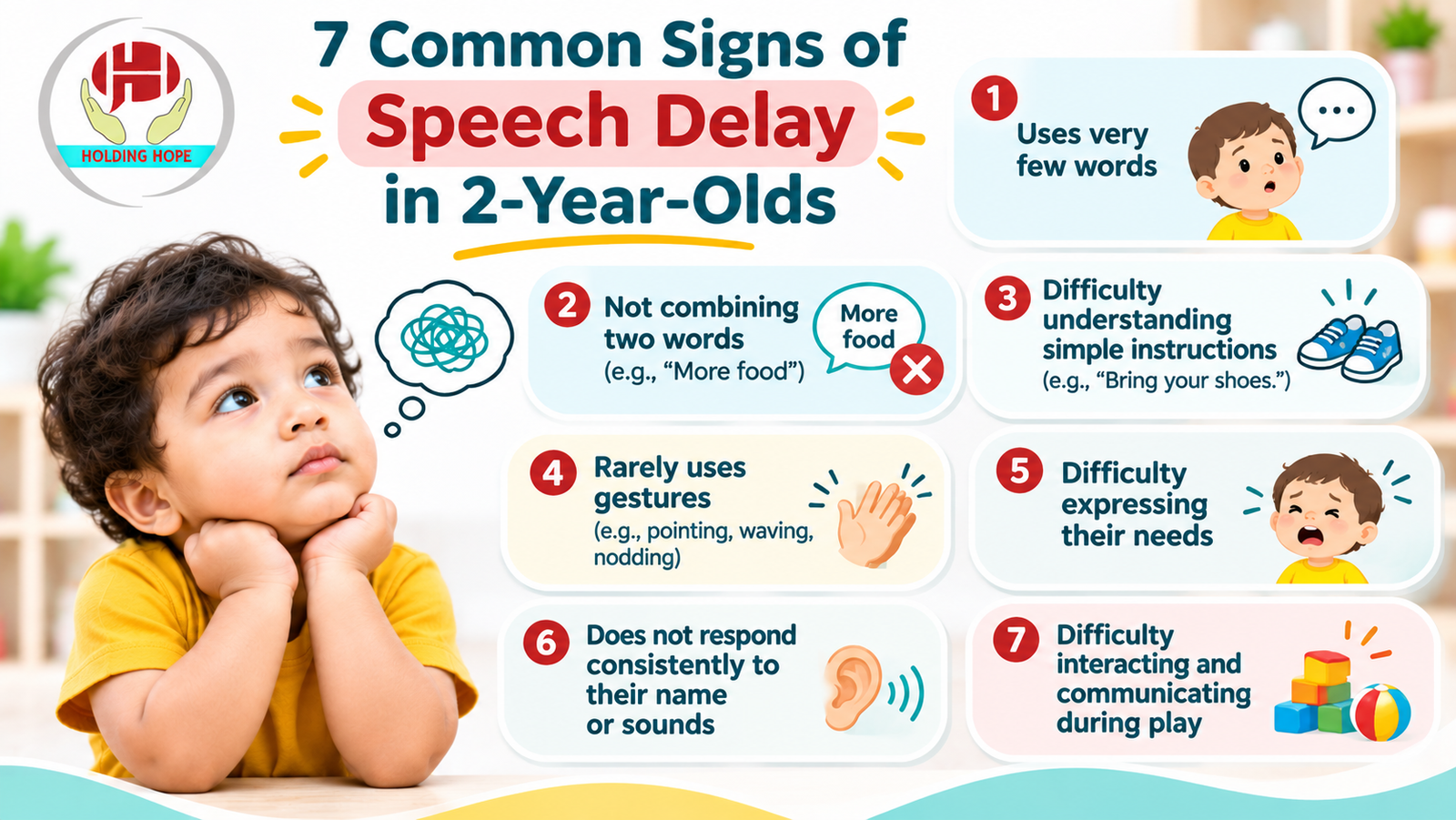
Parents are often the first to notice changes or difficulties in their child’s communication. Here are some signs that may indicate a need for a speech and language assessment.
1. Your Child Uses Very Few Words
By age 2, children are generally beginning to use a growing vocabulary to communicate.
If your child uses very few meaningful words, rarely attempts to name familiar people or objects, or does not use words to express basic needs, consider seeking professional guidance.
2. Your Child Is Not Combining Two Words
One important communication milestone around age 2 is beginning to put two words together.
If your child is not yet combining two words, a speech-language assessment can help determine whether additional support is needed.
3. Your Child Has Difficulty Understanding Simple Instructions
Communication is not only about speaking. Understanding language is equally important.
Notice whether your child can follow familiar, simple instructions such as:
“Bring your shoes.”
“Give me the ball.”
Difficulty understanding everyday instructions may indicate a need to assess receptive language skills.
4. Your Child Rarely Uses Gestures to Communicate
Young children communicate through more than spoken words.
They may point towards objects, wave goodbye, nod, shake their head, show toys or use gestures to express what they want.
If your child rarely uses gestures or other nonverbal ways to communicate, discuss this with a professional.
5. Your Child Has Difficulty Expressing Their Needs
Some children become frustrated when they cannot communicate what they want.
For example, your child may cry, pull your hand towards an object, point repeatedly or become upset when you do not understand their needs.
This does not automatically mean your child has a speech delay, but it may be helpful to understand how they are communicating and whether they need support.
6. Your Child Does Not Respond Consistently to Their Name or Sounds
If your child does not consistently respond when called or seems not to notice certain everyday sounds, hearing should be considered as part of the assessment.
Hearing difficulties can affect speech and language development. A hearing evaluation may be recommended when there are concerns.
7. Your Child Has Difficulty Interacting and Communicating During Play
Children learn communication through everyday interactions.
Notice whether your child shares attention, shows you interesting objects, uses gestures, imitates actions or engages in simple back-and-forth play.
Difficulties in social communication may be worth discussing with a professional, particularly when they occur alongside other developmental concerns.
What Causes Speech Delay in 2-Year-Olds?
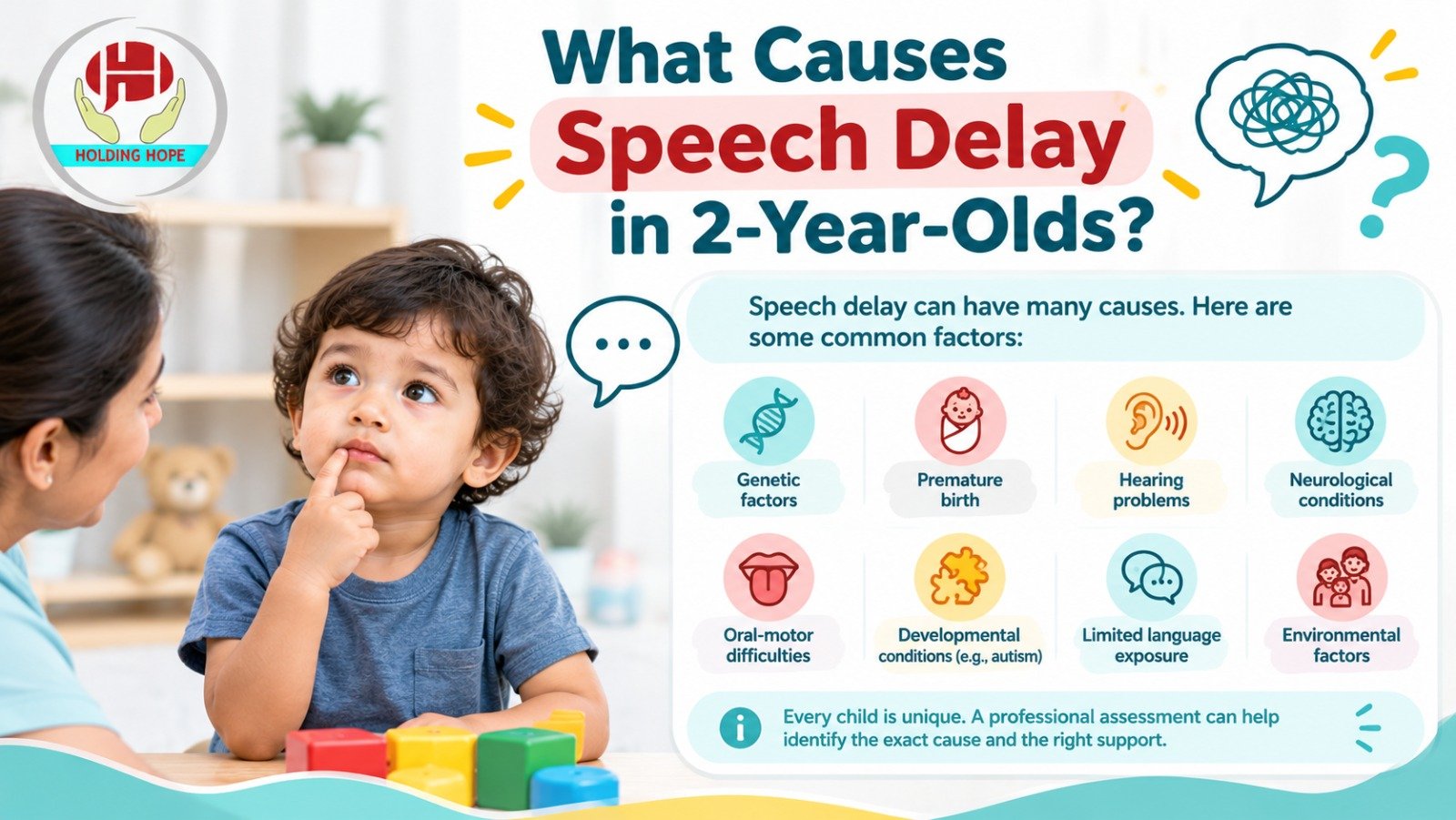
There is no single explanation for every child who starts speaking later than expected. Speech and language development can be influenced by several factors.
Some possible contributing factors include:
1. Hearing Difficulties
Children learn spoken language by listening to the people and sounds around them.
Hearing difficulties, including some forms of hearing loss, can affect how children develop speech and language skills. This is why hearing assessment is an important consideration when a child has delayed speech.
2. Expressive Language Difficulties
Some children understand much of what is said to them but have difficulty using words to express themselves.
This may involve limited vocabulary, difficulty combining words or challenges communicating their thoughts and needs.
3. Receptive Language Difficulties
Receptive language refers to understanding words, sentences and instructions.
A child who has difficulty understanding spoken language may also experience challenges in everyday communication.
4. Developmental Differences
Speech and language delays can sometimes occur alongside broader developmental differences.
For example, some children with autism or other developmental conditions may experience differences in communication, language development, social interaction or play.
An appropriate developmental assessment can help identify the child’s individual needs.
5. Neurological or Developmental Conditions
Certain neurological, genetic or developmental conditions may affect speech, language and communication development.
A qualified professional can help determine whether further evaluation or support is needed.
6. Differences in Language Exposure and Communication Experiences.
Children learn communication through everyday interaction, play, conversation and shared activities.
However, speaking more than one language at home does not automatically cause speech delay. Children growing up with multiple languages should be assessed while considering their communication abilities across all the languages they use.
The reason for a child’s speech delay cannot be identified simply by looking at how many words they speak. An individual assessment is important.
Looking for Professional Help for Your Child?
If you are concerned about your 2-year-old’s speech and language development, don’t hesitate to seek professional guidance. An early assessment can help you understand your child’s communication needs and identify the right support.
Book an appointment with Holding Hope Centre for Speech & Hearing, Greater Noida, today! Let our team guide you in taking the right steps towards supporting your child’s speech and language development.
